The Mekong Center for Research and Policy
Transformative Research for a Sustainable Future
The Mekong Center is building a more sustainable, inclusive future by leveraging real-world science for impact through policy and practice reform. We believe that we are better together – overcoming barriers through evidence and dialogue to create scalable solutions to our region’s most pressing challenges.
Thematic
Domains
Inclusive Development
Agrifood Systems
Forests for Life
State and Society
Water for All
Climate Justice
The Mekong
Collective
Akiko Inoguchi
Akiko Inoguchi
Akiko has been working in the Mekong region since 2005, mostly with FAO, in the forestry sector with an increasing focus on climate change. REDD+ and carbon integrity, forest and land governance, forest land tenure, and access to markets are among the main areas of her focus. She now resides in Kyoto, Japan with her family.
Chan Sophal
Chan Sophal
Chan Sophal is Executive Director of the Centre for Policy Studies (CPS), a Cambodian think tank providing research services in the area of economic development, mainly in agriculture, rural development and economic sectors. For over the past 30 years, Sophal has held senior analytical positions at the World Bank, USAID funded project HARVEST, Leopard Capital (private equity fund), UN World Food Programme, Cambodia Development Resource Institute (CDRI), and the Ministry of Agriculture, Forestry and Fisheries (MAFF). Mr. Chan has conducted a large number of research studies, authored many papers, and led research networks including the Cambodian Economic Association (CEA) and regional Development Analysis Network (DAN). He currently serves as Board Director of KB PRASAC Bank and Carbon Capital. He is also a pro-bono Advisor to the Office of the Council of Ministers of Cambodia. Mr. Chan received an MSc in Agricultural Economics from the University of London, Imperial College at Wye, UK, a Bachelor in Agribusiness from the University of Queensland, Gatton College, Australia, and a Diploma in Hydrology from National Institute of Agriculture Prek Leap.
Hope Zhuang
Hope Zhuang
Dr. Hope (Hao) Zhuang is a conservationist with over 25 years of experience in environmental governance and public policy. Her work focuses on advancing nature conservation through innovative policy design and implementation in China and across the Asia-Pacific region. She has held senior positions with leading international organizations, including The Nature Conservancy, IUCN, Fauna & Flora International, and Winrock International, as well as serving as a research fellow at Vermont Law School and Cornell University. Most recently, as Program Manager of the Explore Program at RECOFTC in Bangkok, Dr. Zhuang led a regional initiative that strengthens the science-policy interface for forest landscape governance across eight Southeast Asian countries. She holds a Ph.D. in Natural Resources and the Environment from Cornell University and is a member of the IUCN Commission on Environmental Law.
Hue Le
Hue Le
Dr. Hue Le is a senior researcher and lecturer at VNU – Central Institute for Natural Resources and Environmental Studies (VNU-CRES), Vietnam National University (VNU), Hanoi. Her research focuses on natural resource management, land tenure, gender, migration, and climate change. Her current project, SHEroic Journeys: Vietnamese Women’s Eco-Trekking Tales for Climate Action, funded by the British Academy, works with ethnic minority women in Northern Vietnam to explore how creative storytelling and traditional knowledge can advance climate resilience and gender equity.
Ian Baird
Ian Baird
Dr. Ian G. Baird is a full professor of Human and People-Environment Geography and Southeast Asian Studies in the Department of Geography at the University of Wisconsin-Madison. As a political ecologist and historical geographer, Ian’s research is varied, with his interests including agrarian change, hydropower dams and fisheries in the Mekong River Basin, land tenure, Indigeneity in Southeast Asia, development studies, political geography, historical geography and Hmong, Thai and Lao Studies. Most of his research is focused in Laos, Thailand and northeastern Cambodia, where he has been working for over 30 years. He is fluent in Lao, Thai and Brao.
Jessica DiCarlo
Jessica DiCarlo
Dr. Jessica DiCarlo is a human geographer, political ecologist, and ethnographer whose work examines Global China, resource politics, geopolitics, and development. She is an Assistant Professor in the School of Environment, Society, and Sustainability at the University of Utah. Over the past 17 years, she has worked across Asia on questions of development, rural livelihoods, infrastructure, and environmental politics. Grounded in long-term, multi-sited fieldwork, her research investigates how global processes are negotiated in everyday life, tracing how China’s rise as a development actor transforms landscapes and livelihoods across Asia. Her recent projects focus on critical minerals, resource politics, US–China competition, and the evolving geographies of Global China in Southeast Asia.
Juliet Lu
Juliet Lu
Dr. Juliet Lu is an Assistant Professor in the School for Public Policy and Global Affairs and the Department of Forest Resources Management at the University of British Columbia, and a Research Fellow of the Mekong Center. She is a political ecologist focused on the implications of China’s growing investments in land and other resources in Southeast Asia and beyond. Dr. Lu’s research examines conflicts and governance issues around resource extraction and intensive land use. She focuses on transnational land investments and the rise of private sector sustainable governance initiatives worldwide. She directs grounded research around land conflicts, cash crop-driven land use change, and Chinese investments.
Keith Barney
Keith Barney
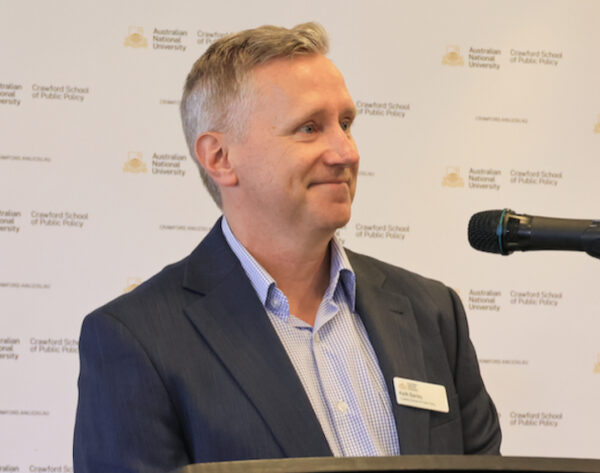
Dr. Keith Barney is a Human Geographer, working in Resources, Environment & Development (RE&D) Department at the ANU Crawford School of Public Policy in 2012. Over the last 25 years, Keith has been engaged with environment and development challenges in rural Southeast Asia. Keith’s scholarly work draws on theoretical approaches from political ecology, resource and economic geography, and agrarian change, with sector specialisations on forestry, land, water, energy, and mining governance. Based on extended, multi-scaled case study research and detailed ethnographic fieldwork, Keith traces changing programs of natural resource management and livelihood production in Southeast Asia.
Manoly Sisavanh
Manoly Sisavanh
Manoly Sisavanh is a passionate conservationist and advocate for sustainable and inclusive development. Since June 2019, she has served as Deputy Country Director of the Wildlife Conservation Society (WCS) Lao PDR, where she co-leads a team of over 100 professionals, driving both policy and practice in protected area management, wetland conservation, wildlife protection, biodiversity-compatible private sector development, and sustainable livelihoods. She also oversees WCS’s Counter-Wildlife Trafficking and One Health programs, while managing office operations to ensure efficient, transparent, and compliant implementation of conservation initiatives. Prior to joining WCS, Manoly worked with the World Bank from 2012 to 2019, contributing to Laos’ transition toward green growth and stronger environmental governance. Her portfolio included work in forest management under the SUFORD Series, biodiversity conservation through LENS and LENS2, and water resource management through the Mekong Integrated Water Resources Management Project. Earlier in her career, she supported national public health advocacy at the National Emerging Infectious Disease Coordination Office (now Department of Communicable Diseases Control). Beyond her work in Laos, Manoly is recognized as a global advocate for climate justice and youth empowerment. She received the Mary Robinson Climate Justice Award in 2019 and was featured in Vanity Fair x One Young World’s Global Goals 2024 (here). Dedicated to mentoring the next generation of environmental leaders, she actively contributes to platforms such as One Young World, YSEALI, and the Rainforest Youth Summit.
Melanie Pichler
Melanie Pichler
Dr. Melanie Pichler is a Professor at the Institute of Social Ecology at BOKU University in Vienna, Austria. Trained in Political Science and Development Studies, she holds a PhD from the University of Vienna and has engaged in interdisciplinary sustainability research with a special focus on conflicts and power relations in agrarian and industrial transformation processes. Her research experience includes such diverse contexts as the contested expansion of palm oil production in Indonesia, forest politics in Laos or jobs-versus-environment dilemmas in the transformation of the European automotive industry.
Micah Ingalls
Micah Ingalls
Dr. Micah Ingalls is the Executive Director of the Mekong Center. For the past two decades, Micah has worked in South, Central and Southeast Asia with the United Nations, multi-lateral and bi-lateral development agencies, academia and the private sector. He has published more than 40 articles, books and book chapters on equitable and inclusive resources governance, environmental sustainability, climate change and complex social-ecological systems. Micah is the son of a smallholder farmer and father of six, with a PhD in Resource Governance from Cornell University in the United States. Contact: micah@mekongcenter.org
Michael B. Dwyer
Michael B. Dwyer
Dr. Michael Dwyer is an Associate Professor of Geography at Indiana University, Bloomington. His research examines the intersections of agrarian change, environmental governance, and energy and infrastructure development with a regional focus on mainland Southeast Asia. He is the author of Upland Geopolitics: Postwar Laos and the Global Land Rush and co-editor of Turning Land into Capital: Development and Dispossession in the Mekong Region, both published in 2022.
Naomi Basik Treanor
Naomi Basik Treanor
Naomi Basik Treanor is the Director of Partnerships and Strategy of the Mekong Center. She is a forest and land governance expert, having worked for nearly two decades bridging evidence-based policy reform with inclusive,on-the-ground engagement to ensure that rural and forest communities have a voice in decisions affecting their lands and livelihoods. Currently, as a Regional Adviser for MRLG, Naomi leads efforts that advance responsible investment, sustainable value chains, and equitable climate finance. Before moving to Laos, she held progressively senior roles at Rights and Resources Initiative, Forest Trends, and World Resources Institute. Naomi has worked as an ally to Indigenous Peoples, local communities, CSOs, and associations across Asia, Africa, and Latin America; engaged with policymakers in Europe, North America and East Asia on shifting consumption patterns; managed complex multi-country programmes; and designed research that has fed directly into major policy reform. She holds a Masters Degree from George Washington University with a self-designed concentration in Social Justice, Natural Resources, and Civil Society. Naomi is a big believer in the power of partnerships and open data to bring about transformative social change and environmental resilience. Contact: naomi@mekongcenter.org
Natalie Campbell
Natalie Campbell
Natalie Campbell is a forest and land tenure and gender specialist whose career has been dedicated to advancing land and forest governance through the power of collective action. She has spent over a decade working with coalitions, alliances, and multi-stakeholder platforms to strengthen the rights of Indigenous Peoples, ethnic minorities, local communities, and women. Since 2019 she has been the Regional Adviser on Customary Tenure and Gender for the Mekong Region Land Governance (MRLG) project. She believes that building bridges across diverse actors — from local communities to policymakers to international organisations — is essential to securing more just and sustainable land and forest governance. Prior to MRLG, she worked with the Rights and Resources Initiative, the International Land Coalition, IFAD, and Bioversity International, consistently shaping strategies that elevated collective voices and enabled collaborative reforms. Natalie holds a Master’s in Development Studies from the Institute of Development Studies (IDS), University of Sussex, with research on India’s Forest Rights Act. Growing up in India, Indonesia, and the United States, she is both a global citizen and deeply grounded in the lived experiences of the communities with whom she works.
Nguyen The Dzung
Nguyen The Dzung
Dr. Nguyen has served as Land Policy Advisor to the Mekong Region Land Governance (MRLG) project since 2016. With more than two decades of expertise in land governance, agriculture, rural development, and poverty reduction, he has played a pivotal role in advancing reform initiatives across these fields in Vietnam. He led several World Bank–funded projects on land administration and information technology development. He contributed to influential publications that underscore the critical links between land, poverty alleviation, and sustainable socio-economic growth in the country. At the 4th Mekong Regional Land Forum, Dr. Nguyen looks forward to an engaging dialogue on the opportunities, challenges, and pathways to sustain and expand MRLG’s achievements beyond 2025.
Nicholas Bosoni
Nicholas Bosoni
Nicholas Bosoni is a documentary photographer and researcher based in Vientiane, Lao PDR. His work focuses on socio-economic transformation, infrastructure development, and resource extraction in the Mekong region. With a background in development studies, his practice integrates long-term visual storytelling with field-based research. Through sustained photographic documentation and participant observation, he examines how large-scale development processes are experienced across landscapes, livelihoods, and everyday life. Since 2017, he has conducted extensive fieldwork across Laos. His long-term project Woven in Silk documents the country’s agrarian transformation and regional connectivity. His work has been published and exhibited internationally, and he collaborates with NGOs, research centers, and development initiatives in the region.
Phuc Xuan To
Phuc Xuan To
Dr. Phuc Xuan To is the Manging Director for our Forest Policy, Trade, and Finance Program, based in Hanoi, Vietnam. He received his doctoral degree in Geography at Humboldt University in Berlin in 2007, where he also worked as a junior researcher at the Junior Research Group on Post-socialist Land Relations. His dissertation examines the political economy of the forest sector in Vietnam, with particular attention given to the dynamics of access and control over forestland and forest resources. From 2007 to 2009, Phuc was a Post-Doctoral Fellow at the Anthropology Department at the University of Toronto, where he was involved in a research project entitled “The Challenges of Agrarian Transitions in Southeast Asia” (ChATSEA). Currently, in addition to his work with Forest Trends, Phuc continues to work with ChATSEA and serves as a Research Fellow at the Asia Institute at the University of Toronto.
Sango Mahanty
Sango Mahanty
Professor Dr. Sango Mahanty is a human geographer who studies the relationships between social and environmental change in the Mekong region. Her research has examined land and forest governance, forest carbon schemes, frontier transformations associated with cross-border trade in agricultural commodities, local and civil society responses to hydropower dams, and the role of local practices and knowledge in pollution management. Her current research focuses on the far-reaching governance challenges raised by Asia’s livestock boom. Professor Mahanty also teaches on pollution/waste, social and environmental impact assessment/evaluation, and supervises Masters and PhD research in her areas of expertise.
Santi Saypanya
Santi Saypanya
Dr. Santi Saypanya has over two decades of experience advancing biodiversity conservation and sustainable development in the Lao People’s Democratic Republic (Lao PDR). His work has centered on improving the management and governance of protected areas, with a particular emphasis on integrating the participation and livelihoods of forest-dependent communities through community-based conservation approaches. Santi holds a Bachelor’s degree in Business Administration, a Master’s degree in Social Marketing for Conservation, and a Ph.D. in Conservation Science. He began his conservation career with the Wildlife Conservation Society (WCS) in 2002, contributing to a range of national and landscape-level conservation initiatives. In January 2016, Santi was appointed Deputy Country Program Director for WCS Lao PDR, where he led efforts to strengthen the national protected area management system. Since January 2019, he has served as the WCS Lao PDR Country Program Director, overseeing strategic program development, research coordination, and policy engagement to promote evidence-based conservation and sustainable natural resource management across the country.
Sothath Ngo
Sothath Ngo
Sothath Ngo serves as Research Manager at the Centre for Policy Studies, a think tank NGO in Cambodia. His research experience primarily covers issues related to agrarian change and land use transformation, agribusiness and contract farming models, and rural development. Before that, he was a National Land Governance Facilitator for Cambodia with the Mekong Region Land Governance (MRLG) project for Phase I and Phase II, from 2014 to 2022
Soytavanh Mienmany
Soytavanh Mienmany
Dr Soytavanh Mienmany is a Component Manager for Agriculture of GIZ/CliPAD Project in Laos. She has over 10 years of experience working on rural household livelihoods associated with agriculture, particularly ‘boom crop’ – banana, cassava and teak, and natural resources management. Dr Mienmany co-develops, conducts and communicates research for innovation and sustainability in food and fibre production systems and value chains, focusing on the Lower Mekong Region. She works seamlessly with partners in the public, private and community sectors; with academic and research institutions; and with national, regional and international development organisations. Her activities encompass field and desk research; research reporting in a range of forms and modes; and communication to diverse audiences including policymakers, technical experts, development actors and communities. She holds a PhD from the Australian National University, a Masters from SupAgro Montpellier, France, and Bachelors from the National University of Laos.
Tuan Do Anh
Tuan Do Anh
Dr. Tuan is a professor of Vietnam National University of Forestry, Vietnam. He has over 30 years of teaching and research on forestry and is a policy and legal expert who frequently accompanies the government agencies in evaluation and drafting forestry law and policy.
Yang Bin
Yang Bin
Dr. Yang Bin is the Director of the Mekong Center’s China Programme. He is a specialist in agricultural and rural development with nearly two decades of experience in natural resource management and rural land governance. He has worked across multiple countries, particularly in the Himalaya and Mekong regions, gaining extensive cross-cultural and practical experience. With a Ph.D. in Ethnoecology, he applies a systematic framework to connect research with field practice. Growing up in a mountain village in southern China, he developed a deep understanding of rural realities and farmers’ perspectives. This background shapes his sensitivity to the complexity of rural development. Meanwhile, the profound transformation he witnessed in rural China strengthened his belief that rural communities everywhere can move toward a better future. This conviction continues to guide his long-term commitment to sustainable agriculture and rural development. Contact: yangbin@mekongcenter.org